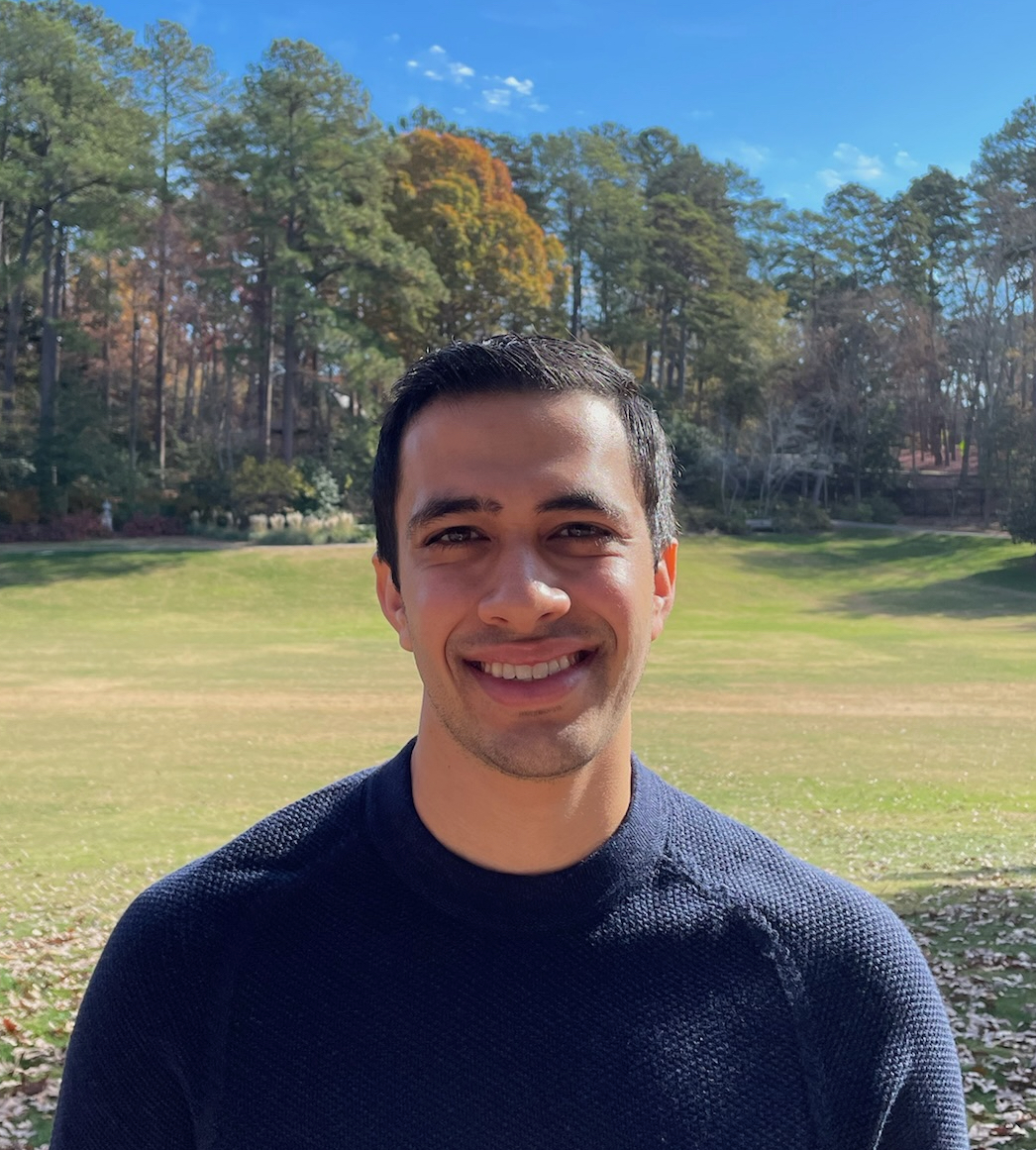
I am currently a Postdoctoral Associate in the Department of Statistical Science at Duke University, advised by Surya Tokdar and Jennifer Groh. I completed my Ph.D. in Biostatistics at UCLA, advised by Donatello Telesca.
Research
My research develops statistical methodology for complex neural data and the computational tools to make inference tractable. In an era dominated by big data, I focus instead on small systems with limited data: a single neuron among the billions in the brain, a handful of simultaneously recorded neurons, or an aggregate measure of population activity such as LFP or EEG. The systems are small, but the inferential problems they pose are not—the data exhibit complex dependence structures, and the processes generating them are only observed indirectly. The neuroscience literature, however, offers a rich body of theory about the mechanisms underlying neural activity. A spike train, for instance, is not simply a point pattern we wish to model; under the integrate-and-fire framework, it is the observable consequence of a latent, continuous-time voltage process crossing a threshold.
This motivates the central question of my work: Can we incorporate this scientific knowledge into our statistical models so that precise hypotheses become testable? Inferring the underlying latent, continuous-time dynamics from only the hitting times pushes beyond what available statistical methodology and computational tools can reliably handle. Consequently, much of the existing literature falls into two opposite camps: (1) abstract statistical models that fit the data well but cannot address mechanistic questions, or (2) detailed theoretical models that are validated by qualitatively comparing simulated and recorded data rather than through formal statistical inference. My goal is to close that gap: to build the statistical methods that let neuroscientists test hypotheses about how the brain works directly, rather than settling for indirect evidence.
How Individual Neurons Encode Multiple Stimuli: A Multiplexing Framework
One leading theory—multiplexing—proposes that neurons temporally switch between encoding different stimuli, producing a fluctuating pattern of spike activity. Testing this theory rigorously requires a statistical framework capable of making precise, localized inferences about which stimulus is being encoded by each individual spike.
I developed a mechanistic state-space model for spike train data, grounded in the integrate-and-fire framework, in which multiplexing arises from competition between latent drift-diffusion processes. The model's non-Markovian, continuous-time structure required a novel MCMC scheme combining Hamiltonian Monte Carlo with filtering algorithms. Applied to data from the Groh Lab at Duke, the framework found that multiplexing occurred in approximately 20% of neuron-stimulus triplets, with switching detectable at timescales under 75ms—a level of temporal resolution not possible with existing methods.
Adaptive Generalized Elliptical Slice Sampling
Many of the statistical models I develop for neural data involve high-dimensional, non-standard posterior distributions that standard MCMC methods—including HMC/NUTS—struggle to sample from efficiently. To solve this, I developed the Adaptive Generalized Elliptical Slice Sampler (AGESS): a general-purpose Bayesian computing algorithm that adapts to the geometry of the target distribution, scaling well to high dimensions while remaining applicable to a broad class of lower semi-continuous posteriors.
In case studies spanning deep Gaussian process surrogate modeling, Bayesian neural networks, and high-dimensional sparse regression with horseshoe priors, AGESS proved to be a reliable and efficient black-box sampler. The sampler is implemented as an open-source Julia package with full tutorials included in the documentation.
Characterizing Brain Activity in Children with Autism Spectrum Disorder
A central challenge in studying brain activity via EEG is that standard methods—clustering and functional principal component analysis—assume observations come from a small number of well-separated subtypes. In practice, children's EEG spectra often reflect a continuous mixture of underlying neural patterns, making these methods uninformative.
To address this, I developed a functional mixed membership model that lets each observation belong to multiple latent features simultaneously, capturing the full heterogeneity of brain activity without forcing artificial discretization. Applied to EEG recordings from 97 children with and without autism spectrum disorder (ASD), the model identified two dominant features: an aperiodic "pink noise" signal and the alpha peak, a developmental biomarker of neural maturation. Crucially, ASD children showed a more heterogeneous presence of this biomarker than their typically developing peers—a difference that standard clustering methods could not detect.
I extended the framework to incorporate patient covariates, revealing that developmental shifts in the alpha peak are less pronounced in ASD children as they age.
Neural Population Coordination
Current work extends the single-neuron multiplexing framework to populations of neurons, capturing the continuous-time interactions—both correlated firing rates and correlated firing times—that govern how groups of neurons coordinate to encode complex sensory scenes. This requires inference on latent high-dimensional continuous-time processes from spike timing data alone, a problem that demands both new statistical methodology and scalable computational tools. The AGESS sampler plays a central role in making this inference tractable.